19 June 2017 by Chris Cathrine | Comments: 0
Share this article:
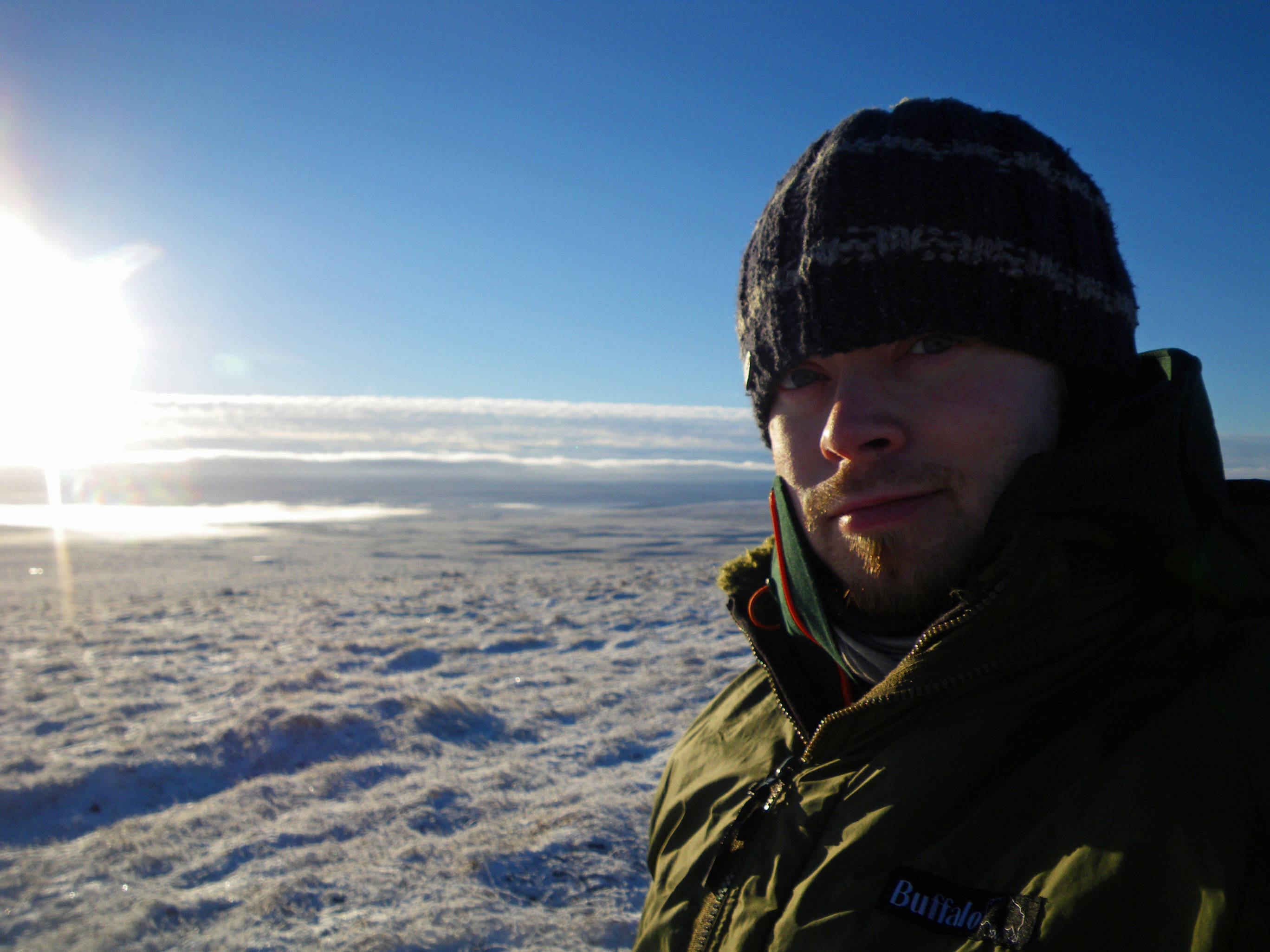
The Caledonian Conservation team will be out in force at the 29th annual Game and Wildlife Conservation Trust (GWCT) Scottish Game Fair from 30 June to 2 July.
We will be hosting a stand at this prestigious country show, billed as ‘Scotland’s most popular outdoor event’, which is held within the parklands of the historic and scenic Scone Palace in Perthshire.
Our stand will be manned over the three days by Chris Cathrine, Director; Liz Coiffait and Julie Smith, Senior Ecologists; Carolyn Gillen and Steven Johnston, Ecologists and Joanne O’Hara, Administrator who look forward to meeting past, present and future clients.
By attending the fair we look forward to establishing new relationships with those that are responsible for the management of estates and other land in Scotland, who may need professional ecology advice, as well as developers, surveyors, wildlife societies and others that have countryside affiliations. With members of the team specialising in everything from wildlife and habitat surveys to Ecological Impact Assessments and Habitat Management Plans there will be plenty of expert advice on hand for visitors to our stand.
If you’re at the fair be sure to come and see us at stand S22a on Stag Row. See you there!
For more information on the Scottish Game Fair, visit: www.scottishfair.com
For more information about GWCT, visit: www.gwct.org.uk
12 May 2017 by Chris Cathrine | Comments: 0
Share this article:

Carrying out ecology surveys across Scotland means that the Caledonian Conservation team are occasionally lucky enough to witness some great natural spectacles. On a recent trip to Skye we were treated to a stunning display of the Northern Lights, with a backdrop of an incredibly clear starry night sky virtually unpolluted by light. Our hosts Katrina and Dave at Foxwood Bed & Breakfast keep a careful eye on the Aurora forecast and persuaded us to venture back outside after a busy day of surveys.
(Photograph © Dave McGough, Foxwood Bed & Breakfast)
08 May 2017 by Chris Cathrine | Comments: 0
Share this article:
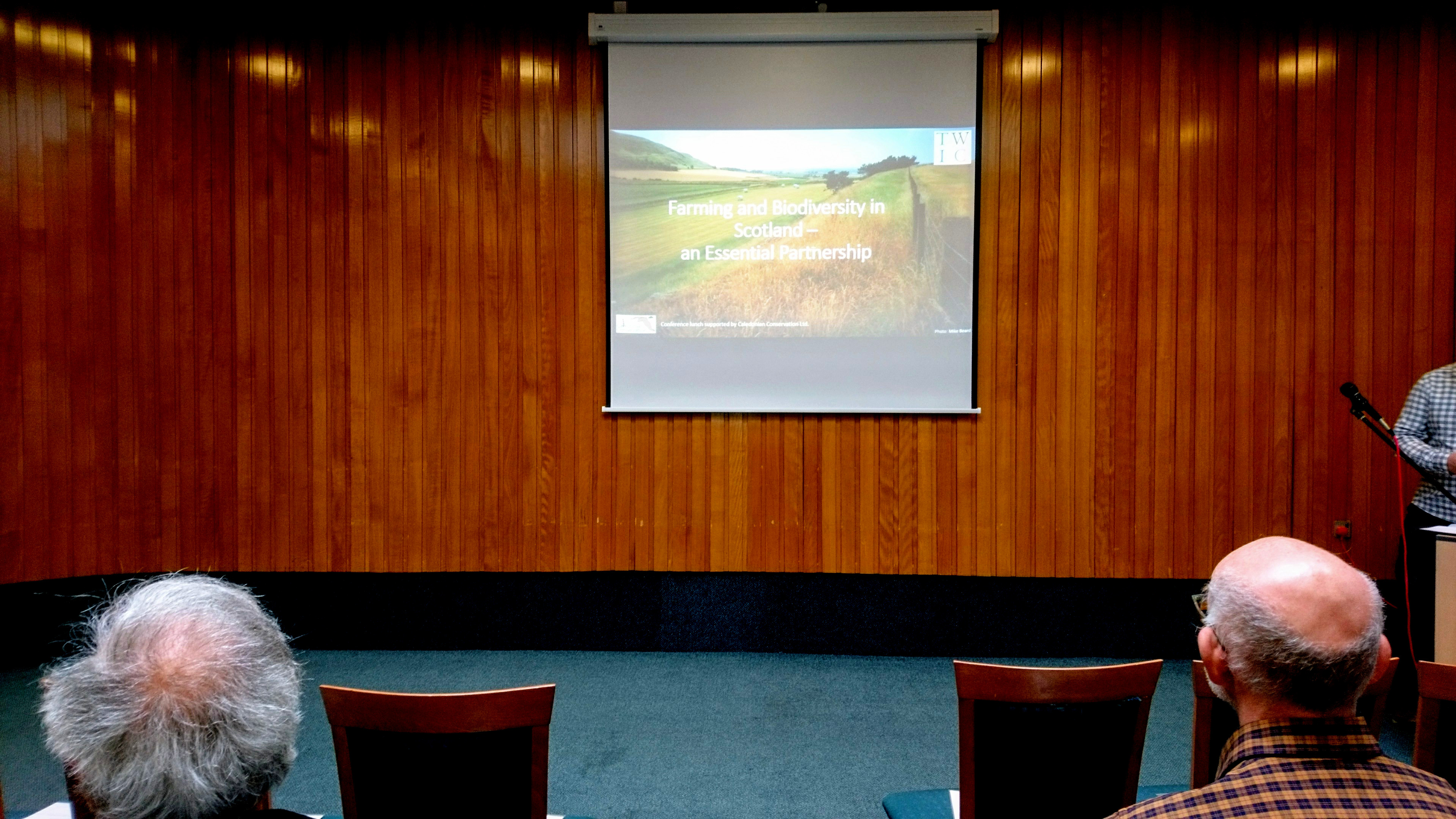
Caledonian Conservation sponsored The Wildlife Information Centre (TWIC) Spring Conference ‘Farming and Biodiversity in Scotland – An Essential Partnership’ at Musselburgh on Saturday 29th April. Niall Currie (Assistant Ecologist) reports...
The event was very well attended and allowed farmers, land managers, ecologists and biological recorders to meet and exchange ideas. The excellent range of topics varied from the experience of individual farmers carrying out conservation projects on their farms, to global issues such as planning how best to manage soils and the incredibly complex ecological communities they support.
Other talks included individual species conservation projects, such as the Game and Wildlife Conservation Trust’s research into improving the survival prospects of grey partridge (Perdix perdix) on farms by increasing vegetation cover during the breeding season and over winter.
The break for lunch, gave attendees the opportunity to explore stands and learn about TWIC’s latest citizen science project - the Scottish Spider Search - which Caledonian Conservation has helped to develop in partnership with the British Arachnological Society and Buglife.
The afternoon session included an update from Pete Minting (Amphibian and Reptile Conservation Trust) on the exciting ‘Great Crested Newt Detectives Project’, which has been trialing new methods of using DNA samples of pond water to determine whether great crested newts, and to which Caledonian Conservation has also contributed by surveying remote ponds and providing control samples from known sites.
The conference was a great success, being the largest arranged by TWIC to date, and a ‘sell out’ (although Caledonian Conservation’s sponsorship allowed the conference to be free to attend).
05 May 2017 by Chris Cathrine | Comments: 0
Share this article:
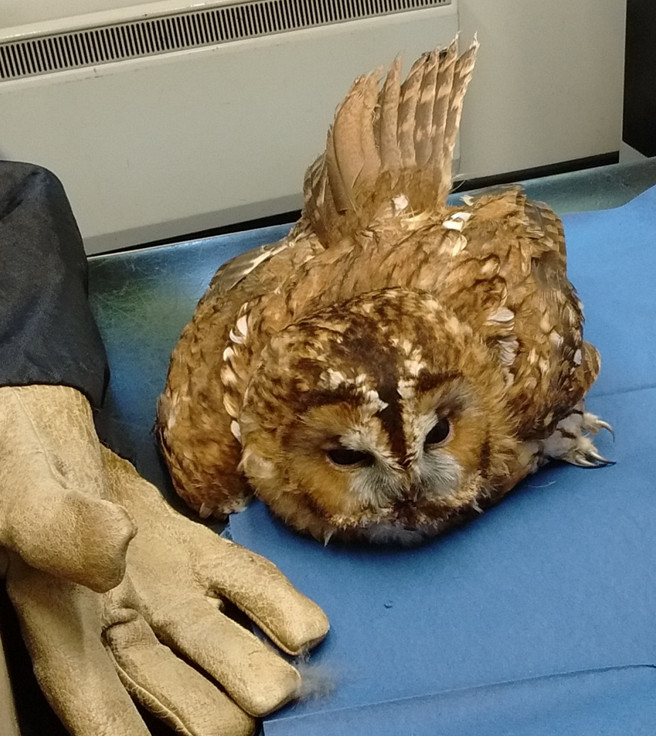
As the Caledonian Conservation team is out surveying wildlife at all hours, it should come as no surprise that we are often the first to come across animals that need help. Carolyn Gillen (Ecologist) reports on our latest rescue...
While out conducting bird surveys last week, we came across this tawny owl injured on the road. After a short stay in our B&B’s woodshed and a trip to the vet, we are happy to report that it is recovering at the SSPCA’s Wildlife Rescue Centre! They plan to release it back into the wild once it is fully mended.
If you find an injured wild animal in Scotland, you can call the SSPCA’s Animal Helpline at 03000 999 999 or visit their website at https://www.scottishspca.org/wildlife/
28 April 2017 by Chris Cathrine | Comments: 0
Share this article:

A new book, ‘Amphibians & Reptiles of Scotland’, has been published. This is the most comprehensive publication on Scotland’s herptiles (amphibians and reptiles) in recent history, including all details of ecology and distribution for all of our native species (including sea turtles) as well as introduced and vagrant species. Chapters also cover conservation, legal protection, cultural connections, projects and development mitigation.
The principle authors, Chris McInerny (University of Glasgow) and Pete Minting (Amphibian & Reptile Conservation Trust) bring a wealth of experience, while guest authors bring particular expertise. Chris Cathrine (Caledonian Conservation Ltd) prepared the grass snake and development mitigation sections, while David O’Brien (Scottish Natural Heritage) wrote the chapter on great crested newt. All authors drew on a wide range of published sources, and information from other experts.
The book also boasts lavish colour photographs, distribution maps and a beautiful frontispiece by Chris Rose.
Caledonian Conservation Ltd is proud to have sponsored the production of this book, which is an excellent resource for professionals and interested members of the public alike.
The book is available in print, costing £27.50 (inclusive of postage within the UK) – contact Chris McInerny for details of how to order your copy (Chris.McInerny@glasgow.ac.uk).
The book can also be downloaded as a free PDF from the Glasgow Natural History Society website.
13 April 2017 by Chris Cathrine | Comments: 0
Share this article:
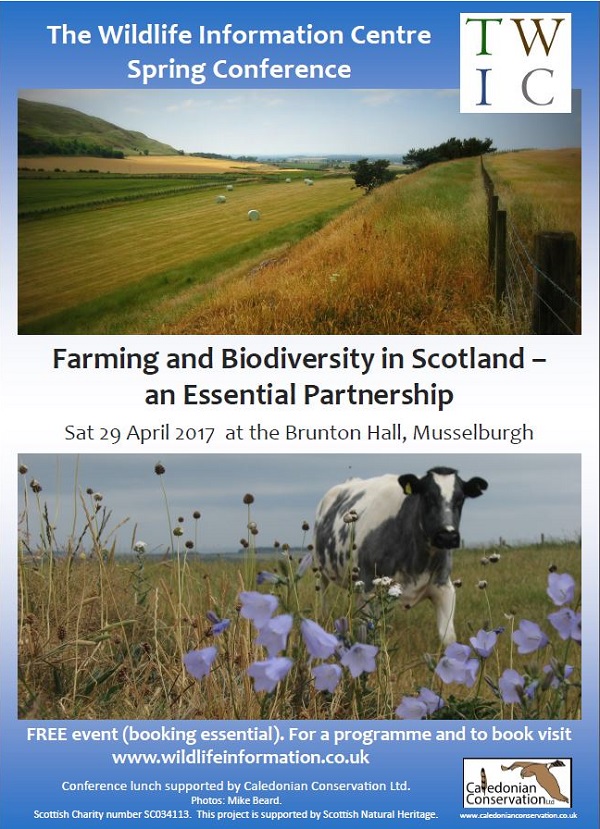
Caledonian Conservation Ltd is proud to sponsor The Wildlife Information Centre (TWIC) 2017 Spring Conference, to be held in Musselburgh on 29th April. The topic, Farming and Biodiversity, is always important but is brought in to sharper focus with the uncertainty created by Brexit.
Farming and biodiversity are an essential partnership – farming cannot succeed without the ecosystem services necessary to support it, such as pollination (by wild solitary bees, bumblebees, beetles, flies, butterflies and moths as well as domesticated honey bees), soil creation and recycling (by a variety of worms, springtails, symphylans, fungi – the list goes on!), clean water and natural pest control. Farming can also offer excellent opportunities to support biodiversity, for example birds (breeding habitat for farmland bird species, nesting opportunities for owls, foraging habitat for raptors and owls), mammals (foraging and roosting opportunities for bats), reptiles (hibernation sites in walls and foraging opportunities in field margins), amphibians (ponds and a mix of farmland habitats can be excellent for great crested newts), invertebrates and plants.
Reflecting this, the conference has a superb and varied programme with talks on soil communities (by Dr Tim Daniell of University of Sheffield / The James Hutton Institute), grey partridge conservation (by Fiona Torrance of The Game and Wildlife Conservation Trust) and great crested newts (by Pete Minting of Amphibian and Reptile Conservation Trust) amongst other topics.
Of course, members of the Caledonian Conservation Ltd team will also be at the conference, so it is an opportunity to learn more about the work we do.
The conference is free to attend, and includes a buffet lunch.
For more information on the programme and to book, visit the TWIC website.
We hope to see you there!
11 April 2017 by Chris Cathrine | Comments: 0
Share this article:
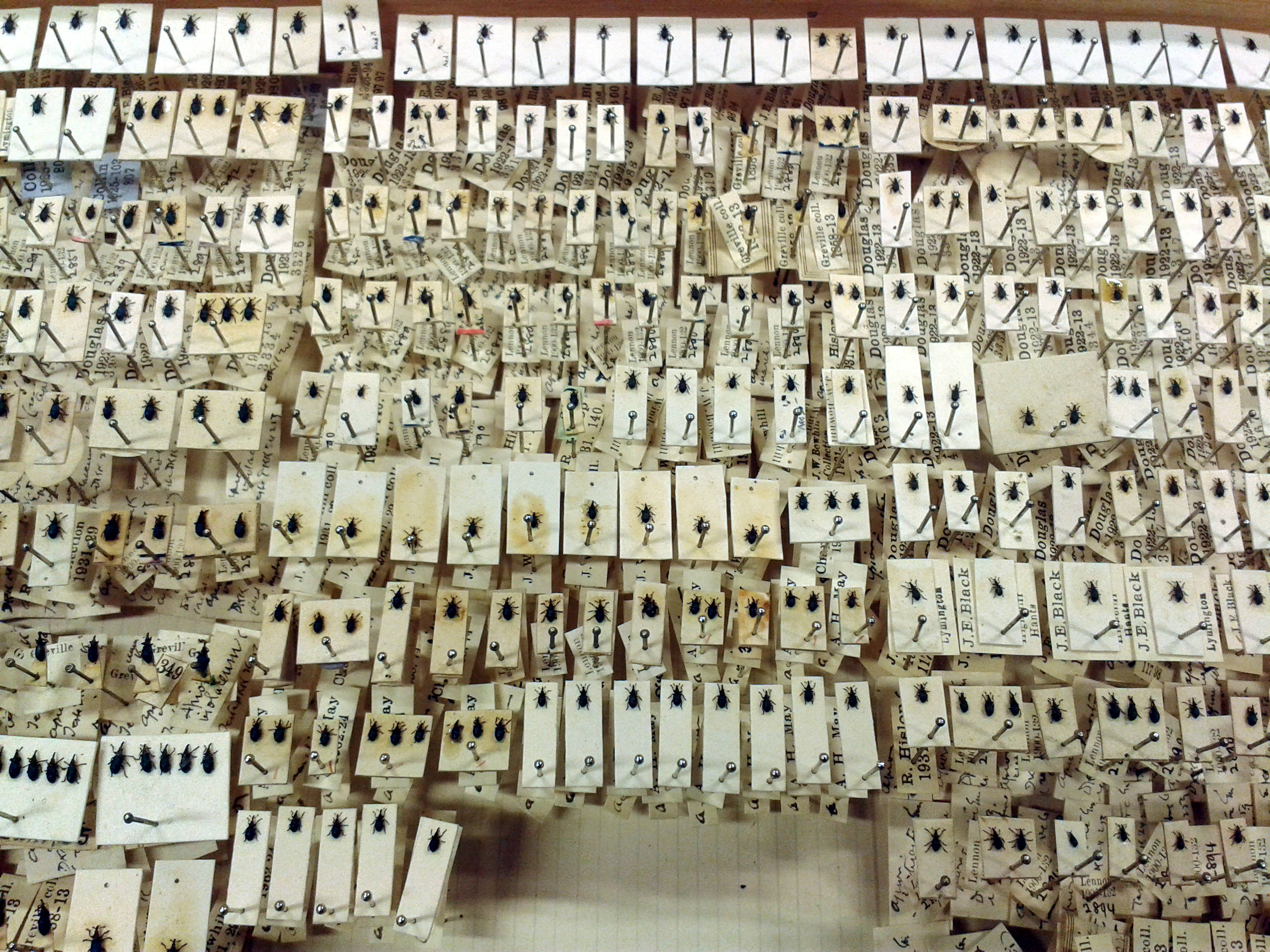
In September 2016, Director Chris Cathrine carried out invertebrate surveys at Scottish Wildlife Trust’s (SWT) Balgavies Loch reserve using Caledonian Conservation’s bugvac (a modified leaf blower that sucks bugs into a net). Bugvac is excellent at turning up invertebrates such as spiders and beetles hiding deep within vegetation that would be difficult to collect or missed entirely using traditional collection methods. Recently we identified the species collected, however some of these invertebrates can be very difficult to differentiate from one another, even using the microscopes, identification keys and reference collections we have in the office.
Luckily the National Museum of Scotland Collection Centre in Edinburgh allows access to their collections for reference and research, giving us the opportunity to compare anatomical features of our samples against curated specimens in the collection. In Britain there are around 4,000 known beetle species and, just like people, individuals of each species are unique, coming in a natural range of shapes, colours and sizes. Around a quarter of all beetles are members of the Staphylinidae family (rove beetles), many of which show only very minute physicals differences from one another. A good reference collection with a number of specimens of the same species collected from different geographical locations can prove very useful in aiding identification.
Despite the difficulty of identifying some species, the information gained can be very useful for making informed decisions about changes to land management. Since many invertebrate species require very specific microhabitats or host plants, they are often excellent indicators of habitat quality and change. The conservation status and habitat preferences of the species identified in different parts of Balgavies Loch reserve will help SWT plan how the site can be best managed for a wide range of wildlife in the future.
Check out National Museum of Scotland’s website for more information about their excellent resources.
The SWT Balgavies Loch invertebrate report is also available to read via the Caledonian Conservation Ltd website, here.
Visit SWT's website to learn more about Balgavies Loch and their other reserves.
20 March 2017 by Chris Cathrine | Comments: 0
Share this article:

Hexicon AB’s Dounreay Trì floating offshore wind farm has been granted consent by Scottish Government. This groundbreaking demonstration project will help change the face of offshore wind energy generation by allowing turbines to be installed in waters too deep for conventional technologies. Not only does this open up new areas for wind development, but may also reduce potential impacts on marine wildlife (e.g. on seabirds) that may be associated with these projects.
Offshore renewable energy plants need to be connected to the grid, which means there are onshore elements to the Dounreay Trì project. Caledonian Conservation Ltd is proud to have completed the full suite of onshore ecology and ornithology work, as well as the terrestrial Ecological Impact Assessment (EcIA) chapters for the Environmental Statement (ES). Ecological features identified and considered in the assessment included various international and national protected sites designated for a range of features including breeding seabirds, raptors, wintering geese and swans, otter, Scottish primrose sand dune habitats. Other ecological features considered included other protected mammals (badger, pine marten, bats), reptiles, barn owl and other bird species. Being objective and clear, we are pleased that our assessment and recommended mitigation was accepted by the determining authorities without objection.
Read the Scottish Government announcement here.
Read more about the recent council approval on the BBC website.
The full Environmental Statement (ES) and Technical Appendices can be read here, or via our publications page.
Read more about RSPB’s support for the Dounreay Trì in The Scotsman.
Read more about Hexicon AB here.
Read more about RES here.
06 March 2017 by Chris Cathrine | Comments: 0
Share this article:
Caledonian Conservation Ltd staff have a wide range of expertise, and run training courses to share skills and knowledge with other ecology professionals. Training that Chris Cathrine (Director) delivers includes running courses on behalf of the Chartered Institute of Ecology and Environmental Management (CIEEM), the leading professional body for ecologists and environmental managers in the UK and Ireland. Having run great crested newt survey and mitigation courses for CIEEM since 2015, Chris is also delivering Ecological Impact Assessment (EcIA) and wind farm bird collision risk modelling training courses for the professional body in 2017.
CIEEM runs EcIA courses for ecology professionals throughout the UK, ensuring trainers have appropriate experience of the country training is delivered in as relevant legislation and policies are devolved. While updating the EcIA Level 2 course for Scotland, Chris worked with CIEEM’s England and Wales trainer, Mike Dean, and attended one of his courses in Wales to ensure that training would be appropriate but consistent between the UK countries.
Chris delivered his first CIEEM EcIA training course in Scotland last week, at a venue in Edinburgh, drawing on over 10 years' experience as an ecological consultant and his previous roles with Local Authority and as planning casework officer for a conservation charity. Participants came from a range of backgrounds including consultants, charities / NGOs and government agencies / local authorities, really adding depth to group activities and encouraging interesting questions. After all, EcIA principles can be applied to reports supporting planning applications, ecology chapters in Environmental Statements for Environmental Impact Assessment (EIA), Strategic Environmental Assessments (SEAs), Habitats Regulations Appraisals (HRAs), conservation management plans for sites – any project that could impact ecology. The course was a success, based on informal and formal feedback, and Chris is looking forward to running more EcIA training on behalf of CIEEM in the future.
Chris will be running the following courses on behalf of CIEEM this spring:
To find out more about Chris’s other courses delivered as part of CIEEM’s training programme and to book on to these or other events, visit: cieem.activclient.com/CIEEM/Events/Event-Listing.aspx
To find out more about CIEEM, visit: www.cieem.net
23 February 2017 by Chris Cathrine | Comments: 0
Share this article:

Hexicon AB’s Dounreay Trì floating offshore wind farm has been approved by Highland Council and has gained support from RSPB. This groundbreaking demonstration project would be built in Caithness, and could change the face of offshore wind, but still requires approval from Marine Scotland and Scottish Government before it gains consent. Floating wind turbines will allow wind farms to be built further offshore, in deeper waters, limiting their impact on sensitive marine wildlife such as seabirds.
Caledonian Conservation Ltd is proud to have provided the complete suite of onshore ecology and ornithology services for the Dounreay Trì project on behalf of RES Offshore and Hexicon AB – offshore wind farms still need to connect to the grid on land, and Caithness hosts much sensitive wildlife. Our surveys and Ecological Impact Assessment (EcIA) helped ensure the project avoids significant wildlife impacts onshore through careful design and mitigation.
Read more about the recent council approval on the BBC website.
Read more about RSPB’s support for the Dounreay Trì in The Scotsman.
Read the Dounreay Trì planning application, including the onshore ecology and ornithology Environmental Statement chapters, here.
Read more about Hexicon AB here.
Read more about RES here.